

How to Keep an Orchid Alive on the Gold Coast
Most orchid advice is written for cold northern houses. Ours is not. A Surfers Paradise florist on watering, light, and making a phalaenopsis flower again.
Victoria founded Flowers of Surfers Paradise at twenty, with her family behind her. She works from the shop on Orchid Avenue.
Two quite different things are sold as "an orchid", and they want opposite treatment.
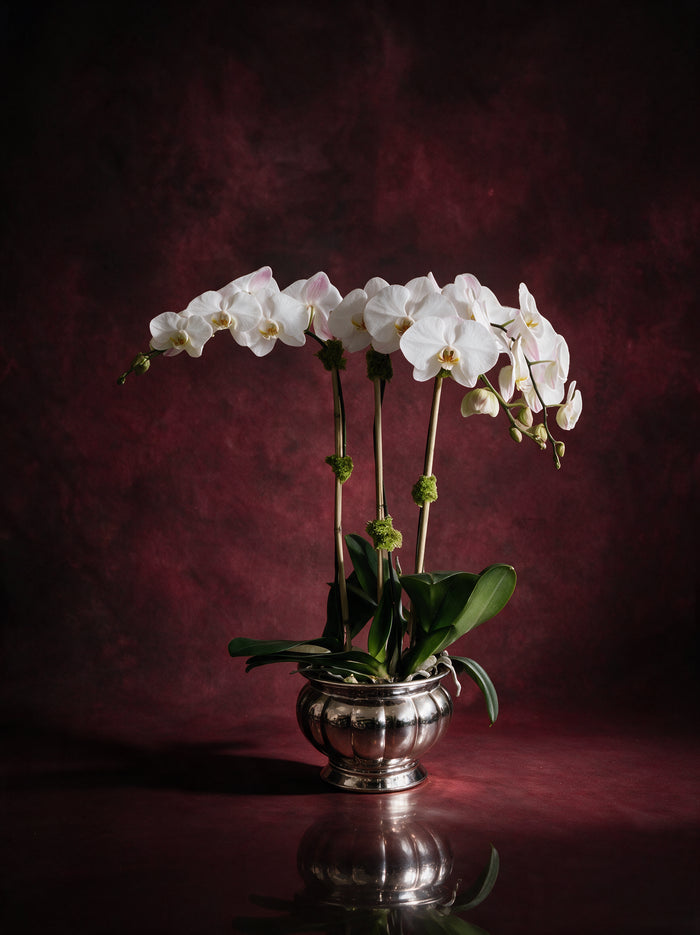
If yours is growing in a pot, with thick leaves and roots and a stem that arches out of the middle, it is a living plant, almost certainly a phalaenopsis, and this is the article for it. If it arrived as slim sprays of flowers standing in water, those are cut Singapore orchids. Beautiful, but cut flowers, and they want the cut flower treatment instead.
The good news about the potted one is that you live in the right place for it. Almost every orchid guide on the internet was written for a heated house in a cold hemisphere, where the work is keeping the plant warm and humid enough. Here the work is the opposite, and our winter hands you the hardest part for nothing.
Water is the only thing that really kills them
The American Orchid Society's culture sheet is blunt about why. A phalaenopsis has no way of storing water except in its leaves, so it must never dry out completely. It also must never sit wet, because roots left in a soggy mix rot. Everything else about watering follows from those two sentences.
So water it thoroughly, let it drain, and then leave it alone until the mix is nearly dry. Not on a weekly schedule. The same plant wants water far more often in February than it does in July, and a calendar cannot see that.
Two details matter more than they sound. Water in the morning, so the leaves are dry by night. And never leave water sitting in the crown, the small hollow where the leaves meet the stem. Water that stays there overnight is how crown rot starts, and crown rot is not something a plant comes back from.
When you are unsure, look at the roots rather than the leaves. Plump and pale green is right. Flat, papery and silver means thirsty. Brown and soft means it has been drowning, and the answer there is less water, never more.
Bright, but never the sun itself
An east-facing window is the ideal: strong morning light and nothing harsh. A north-facing window is lovely behind a sheer curtain. West-facing glass through a Gold Coast afternoon will scorch the leaves, and a scorched leaf does not recover.
The leaf is the gauge. Mid-green, about the colour of a green olive, is a plant getting what it needs. Deep, dark, glossy green looks healthier and usually is not. It is the plant stretching towards light, and it is the most common reason an orchid stays alive for years and never flowers again.
Heat, humidity, and one thing you can stop doing
A phalaenopsis is comfortable at roughly 24 to 29 degrees through the day, with the ceiling somewhere around 32 to 35. A closed-up apartment in February goes past that before lunch. Moving air is what saves it, so leave a door open or put a fan somewhere in the room.
Humidity wants to sit between 50 and 80 per cent, which on this coast it already does for most of the year. So you can stop misting. It adds nothing your own air is not already doing, and humid still air is precisely what fungal and bacterial trouble likes. A fan beats a spray bottle every time.
Why it will not flower again
The answer is almost never water, and almost never feeding. A phalaenopsis sets a new flower spike in response to cool nights, and the American Orchid Society puts the trigger at nights down to about 13 degrees for several weeks through autumn.
Now look at what this coast does on its own. The Bureau of Meteorology's averages for the Gold Coast Seaway, taken across 34 years, give a mean overnight minimum of 13.1 degrees in June and 12.0 in July.
Our winter does for nothing what growers in cold countries build a glasshouse to imitate.
The catch is that the plant has to be able to feel it. An apartment held at one temperature all year never sends the signal, which is why an orchid that flowered every season in a Nerang kitchen can sit twenty floors up and sulk for three years. From about April, put it somewhere it can feel the night: a balcony out of the wind and out of direct sun, a bedroom you do not cool, a window left open.
Once buds appear, stop moving it. Temperatures swinging around at that stage make a plant drop its buds before they open, which is heartbreaking and entirely avoidable.
Leave the spike alone while any of it is still green. When the last flower has dropped, cut above one of the nodes further down for a chance at a quick second showing, or take it back to the base if you would rather wait and have a strong one next season.
Repotting, which hardly anyone does
Orchids are potted in bark rather than soil because the roots need air as much as they need water. Bark breaks down. By the second or third year it has collapsed into crumbs, and crumbs hold water the way soil does, which quietly drowns a plant that had been perfectly happy.
Repot every one to three years into fresh orchid bark, ideally in spring, just after it has finished flowering. The orchid that fails for no reason in its third year did not change. Its mix did.
What we would send
A potted phalaenopsis is the gift we reach for when someone travels, works long hours, or has moved into a place with no garden. It is in flower for months rather than days, it asks for very little beyond a drink when it dries out, and then it flowers again. Ours come as one arching stem, two or three, in white or in soft pink-purple, and the other living plants sit alongside them.
If what you want is the look without the responsibility, Singapore orchids are cut sprays rather than a plant, and they sit with the rest of the orchid work as the most architectural thing in the shop.
And if yours is struggling, bring it in. This magazine is named after the street we are on, and the street is named after the flower, so we are an easy touch for a sorry-looking orchid. Come and see us at Shop 38, The Mark, on Orchid Avenue, or ring 0402 522 505. We love to help.
Orchid questions, answered
How often should I water an orchid? When the mix is nearly dry, and in the morning. That means often in summer and rarely in winter, which is why a weekly routine catches people out.
Why are the leaves going yellow? One old leaf at the bottom yellowing and dropping is ordinary. Several leaves going soft and yellow at once is almost always water sitting around the roots.
Should I cut the flower stem off? Not while it is still green. Once it has finished, cut above a lower node for a possible second showing, or to the base for a stronger spike next season.
Does it need feeding? Yes, lightly and often while it is growing, with a fertiliser made for orchids. Weakly, weekly is the old rule and it holds up well in our climate.
Will it really flower again? It will, once it gets a run of cool nights. Give it somewhere it can feel autumn and it does the rest itself.
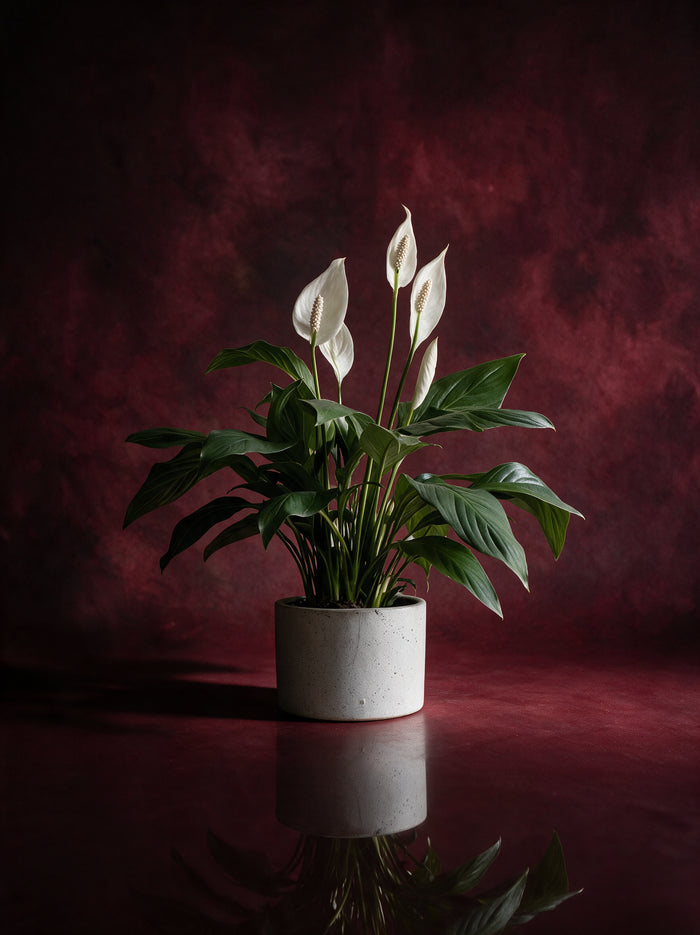
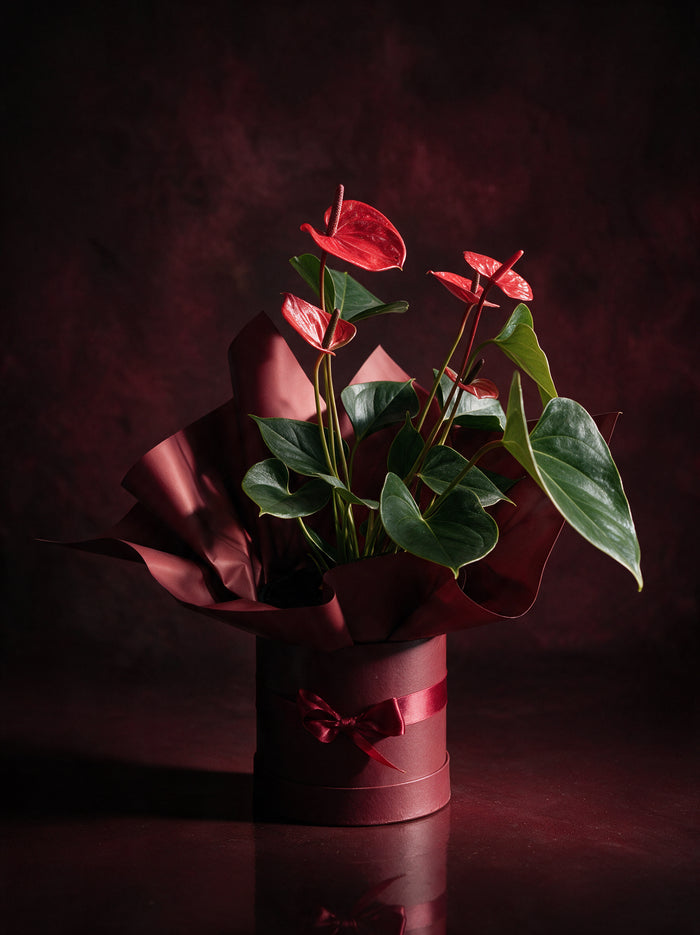
Flowers arranged by hand on Orchid Avenue, delivered across the Gold Coast.
Shop the collectionsBack to ORCHIDORCHID · Flowers of Surfers Paradise · Orchid Avenue


